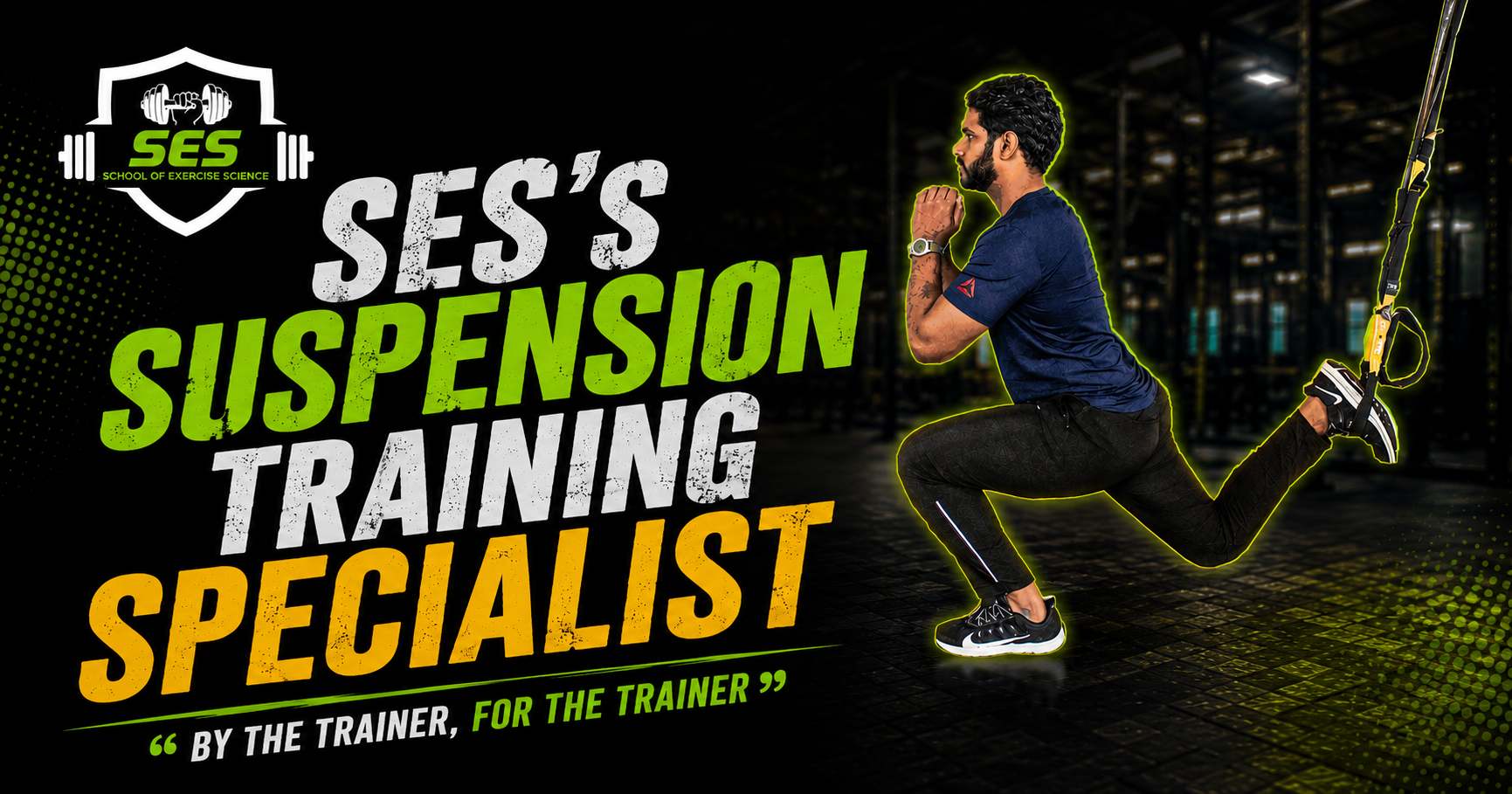
The Suspension Training Specialist course is an advanced practical workshop designed to teach participants how to effectively use suspension training systems (TRX-style straps) to improve strength, stability, balance, flexibility, and functional movement.
Through a combination of theory and hands-on practical sessions, participants will learn proper exercise techniques, coaching methods, safety protocols, and program design strategies. This course equips fitness professionals with the knowledge and confidence to deliver engaging, full-body suspension training workouts suitable for clients of all fitness levels.
After completing this course, participants will be able to:

PURPOSE
To develop the serratus anterior muscles. These muscles help actively stabilize the shoulders at the scapulae. This is an excellent prehabilitation exercise for those involved in overhead throwing sports. It is also great for improving posture for those who spend a lot of time sitting (e.g., have desk jobs). This very subtle movement can reduce the injury and pain associated with poor posture.
PREREQUISITES
The ability to maintain a plank position throughout the exercise, and no shoulder or back pain while performing the exercise.
ADJUSTMENT
Fully lengthen the straps of the Suspension Trainer.
STARTING POSITION
Stand facing away from the anchor point and grab a handle with each hand, placing them shoulder-width apart. Set the body in a straight line, or plank position, with the feet hip-width apart.
DESCRIPTION
Brace the trunk, keep the arms straight, and slowly step backward until there is tension on the straps and the body is at an incline. Simultaneously pull the shoulder blades down and together.
Keeping the arms straight, push the shoulder blades apart without rounding the shoulders.
Return to the starting position, and repeat for the desired number of repetitions.
TEACHING CUES
Envision placing the edges of the scapulae in the back hip pockets.
Brace the trunk as if getting ready to take a punch to the abdomen.
PURPOSE
To develop muscular endurance and stability of the chest, shoulders, triceps, and rectus abdominis.
PREREQUISITES
The ability to maintain a plank position, and no shoulder or back pain while performing the exercise.
ADJUSTMENT
Adjust the straps of the Suspension Trainer to mid-calf length.
STARTING POSITION
Face away from the anchor point, and place the feet in the stirrups.
Place the hands on the ground shoulder-width apart. Set the body
in a straight line, or in plank position.
DESCRIPTION
Brace the trunk and keep the arms straight while pulling the shoulder blades down and together.
Bend at the elbows to lower the body to the ground.
Extend the arms and push the body back to the starting position, and drive the knees toward the chest.
Return to the starting position
TEACHING CUES
Maintain a plank position.
Stay stiff as a board from the head to heels.
Drive the knees to the chest.
PURPOSE
To develop muscular endurance and stability of the chest, shoulders, and triceps, and improve thoracic mobility.
PREREQUISITES
The ability to maintain a plank position, and no shoulder or back pain while performing the exercise.
ADJUSTMENT
Adjust the straps of the Suspension Trainer to mid-calf length.
STARTING POSITION
Face away from the anchor point, and place the feet in the stirrups. Place the hand son the ground shoulder-width apart. Set the body in a straight line, or in plank position, with the feet hip- to shoulder-width apart.
DESCRIPTION
Brace the trunk and keep the arms straight while pulling the shoulder blades down and together.
Bend at the elbows to lower the body to the ground.
Extend the arms and push back to the starting position while rotating the hips.
PURPOSE
To strengthen the rhomboids, upper and lower trapezius, and rotator cuff muscles.
PREREQUISITE
The ability to maintain a rigid torso throughout the exercise.
ADJUSTMENT
Adjust the straps of the Suspension Trainer to mid-length.
STARTING POSITION
Face the anchor point, and grab a handle with each hand using a neutral, overhand, or supinated grip. Assume a staggered stance (or place the feet hip-width apart for more of a challenge). Lean back until the torso is at a 45-degree angle to the ground while pulling the shoulder blades together and downward and keeping the arms completely straight.
DESCRIPTION
Perform a rear deltoid row as previously described on page 64. At this point, the hands and the elbows should be in line with one another.
Move the arms outward, rotate the shoulders, and extend the arms to form a Y .
Now, slowly lower the arms back to the T position; then, extend them and return to the starting position.
TEACHING CUES
Do not lift the elbows above the shoulders during the rear deltoid row portion of the exercise.
Brace the core.
PURPOSE
To develop the biceps and wrist extensors.
PREREQUISITE
The ability to maintain a rigid torso throughout the exercise.
ADJUSTMENT
Adjust the straps of the Suspension Trainer to mid-length.
STARTING POSITION
Face the anchor point, and grab a handle with each hand using an overhand or pronated grip. Position the feet hip- to shoulder-width apart. While keeping the arms completely straight, lean back until the torso is at a 45-degree angle to the ground.
DESCRIPTION
Pull the shoulder blades together and downward, bend the elbows, and bring the hands toward the face.
Extend the elbows and return to the starting position.
TEACHING CUES
Move only at the elbows.
Brace the trunk and squeeze the glutes.
Course Name
Suspension Training Specialist
Course Level
Advanced Certification
Workshop Format
Interactive Practical Workshop with Expert Guidance
Learning Mode
Online • Offline • Hybrid
Assessment Method
Theory Evaluation + Practical Performance
Certification
Industry-Recognized Certificate of Completion
Language of Instruction
English
Practical Experience
Real-time coaching, exercise demonstrations, and hands-on practice sessions
Participants should ideally have:
This course is suitable for: